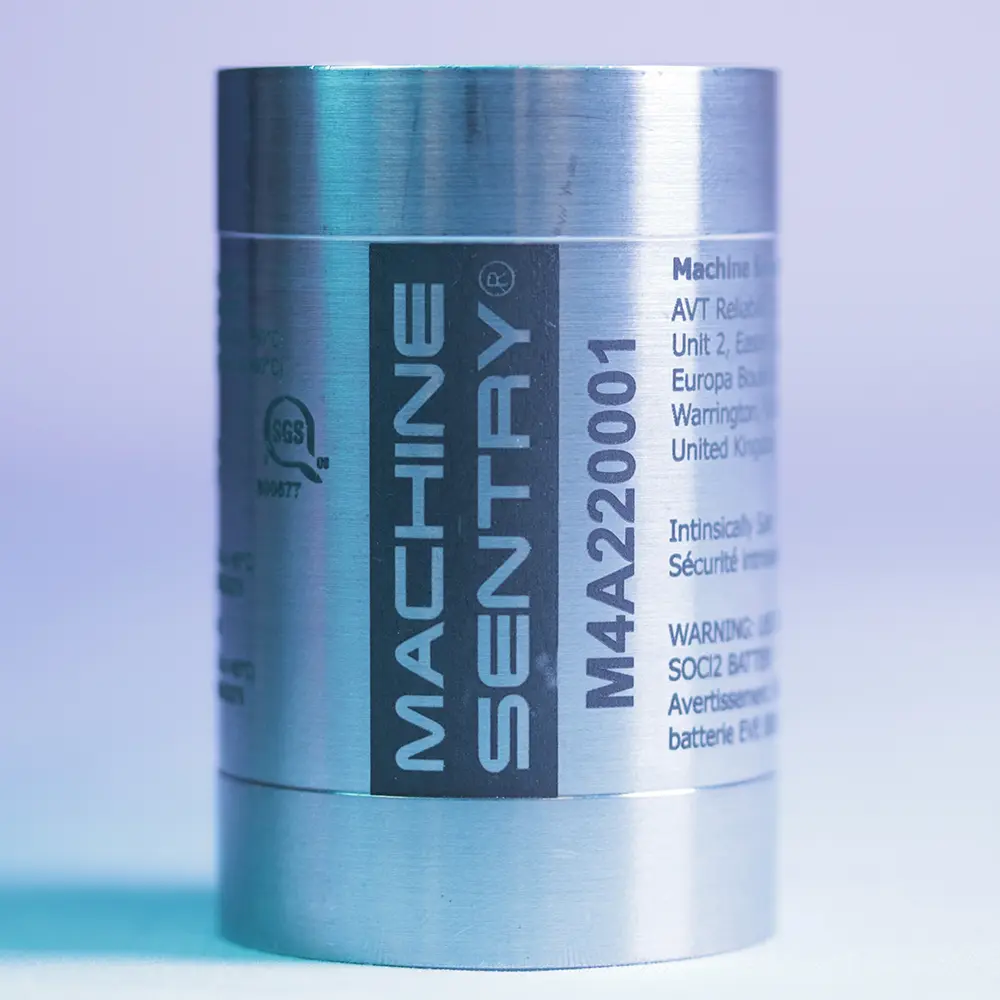
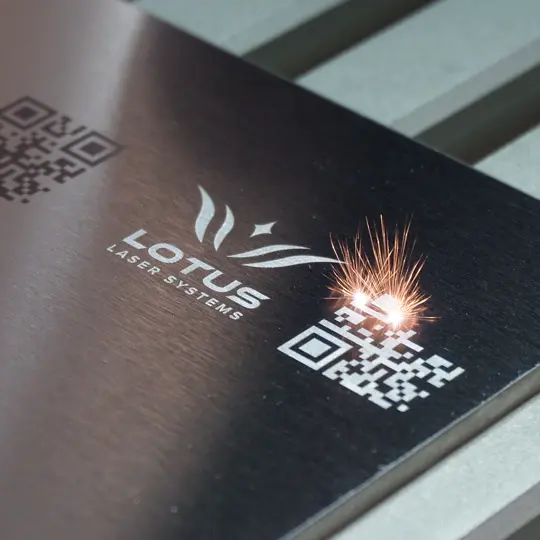
Rotary Engraved Stainless Steel

Fiber Laser vs MOPA Fiber Laser: Which One Do You Need?

MOPA Fiber allows more control over your metal engraving than a regular fiber laser – and here’s why.

Standard Fiber Lasers – also known as ‘Q-Switch’ lasers – are frankly inadequate for marking and engraving. MOPA fiber lasers offer the control to affect the finish of the engraving onto metals and plastics, and Lotus MOPA gives more control than the industry standard machines by far. So, what are the key differences?

YouTube video

If you’re investing in a laser engraving solution, you want it to be versatile. One system that can laser mark all of your products gives you a lot of control over your production.

MOPA Fiber lasers allow you to change how much power and energy marks your material far more than a standard fiber laser, changing laser frequency to a much greater extend and, more importantly, allowing you to control pulse width. This opens the door to color marking, deep engraving, and so much more.

Lotus Fiber Laser Engraving Machines
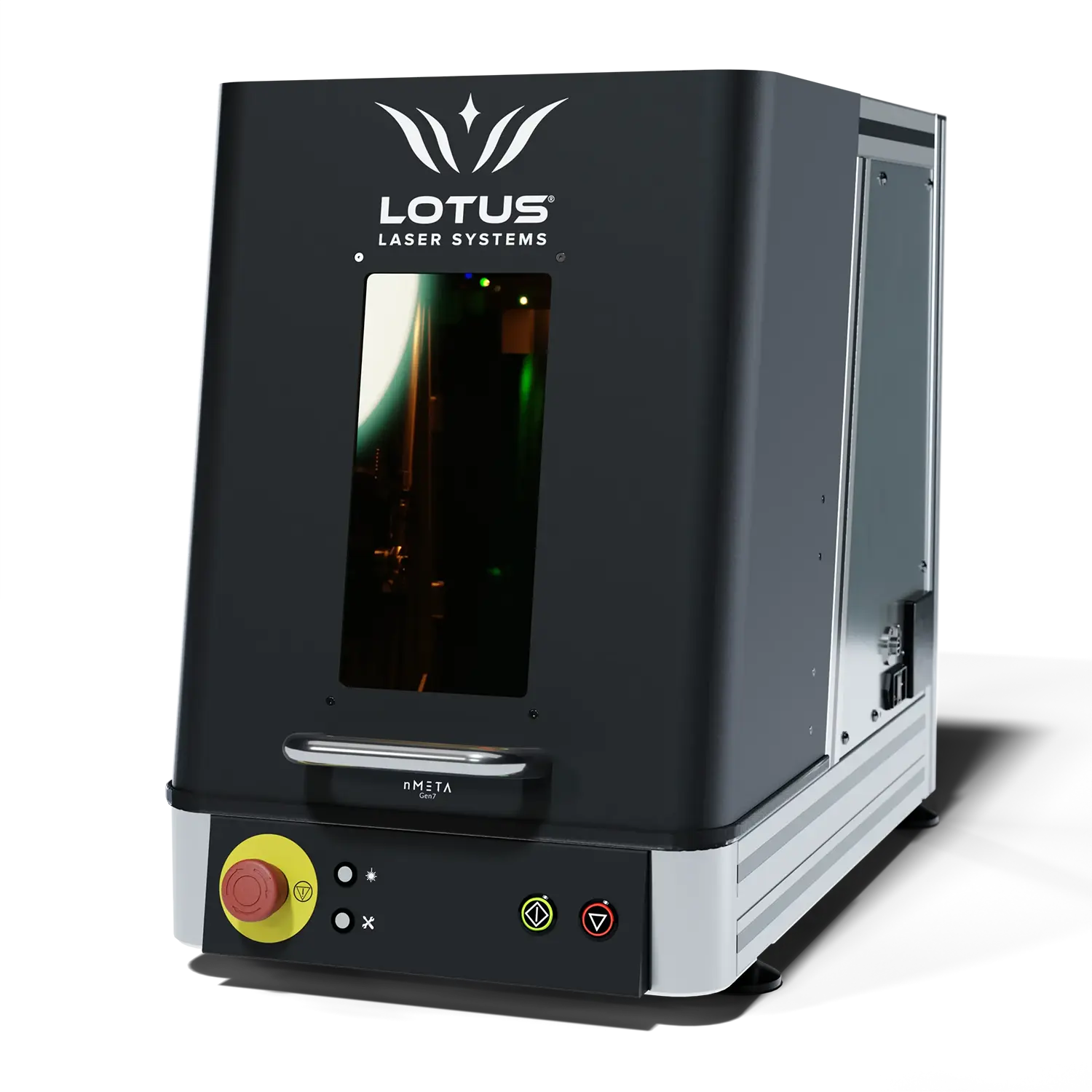
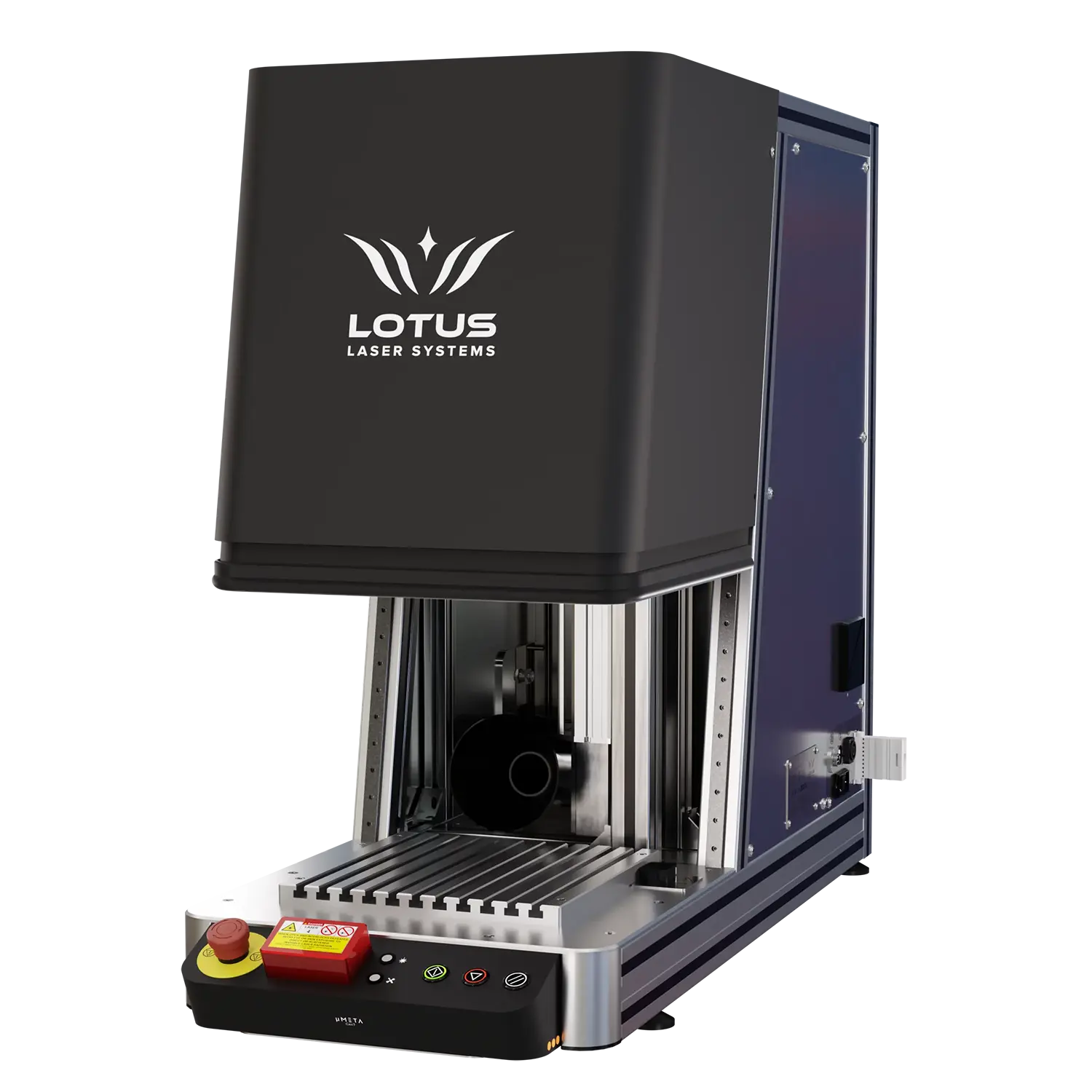
Lotus MOPA Fiber laser engravers for metals and plastics

Frequency Range: MOPA can fire more pulses

Controlling your laser frequency means controlling how many pulses the laser fires per second. If you set your laser to 50kHz, it will fire 50,000 pulses every second.

Most Q-Switch fiber lasers restrict the frequency range between ~20kHz and ~60kHz. Lotus MOPA goes from 1kHz to 3,000kHz.

This massive expansion of frequencies available means you can laser mark more metals & more plastics with more variations and finishes. It also, despite what you might ready on Google, makes the laser faster. If you can fire more pulses, you can move the laser across your material faster and still get a clean, even, consistent engraving result.

Fiber Engraving Metals
Lotus Meta lasers are very powerful at marking and engraving all types of metals

Pulse Width: The ultimate laser control that standard fiber doesn’t have.

It’s not just the number of pulses fired, it’s the length of the pulses that matters. If your laser is holding the energy against the material for a longer time, more heat will go into the material. If the pulse is short, there’ll be very little heat going into the material.

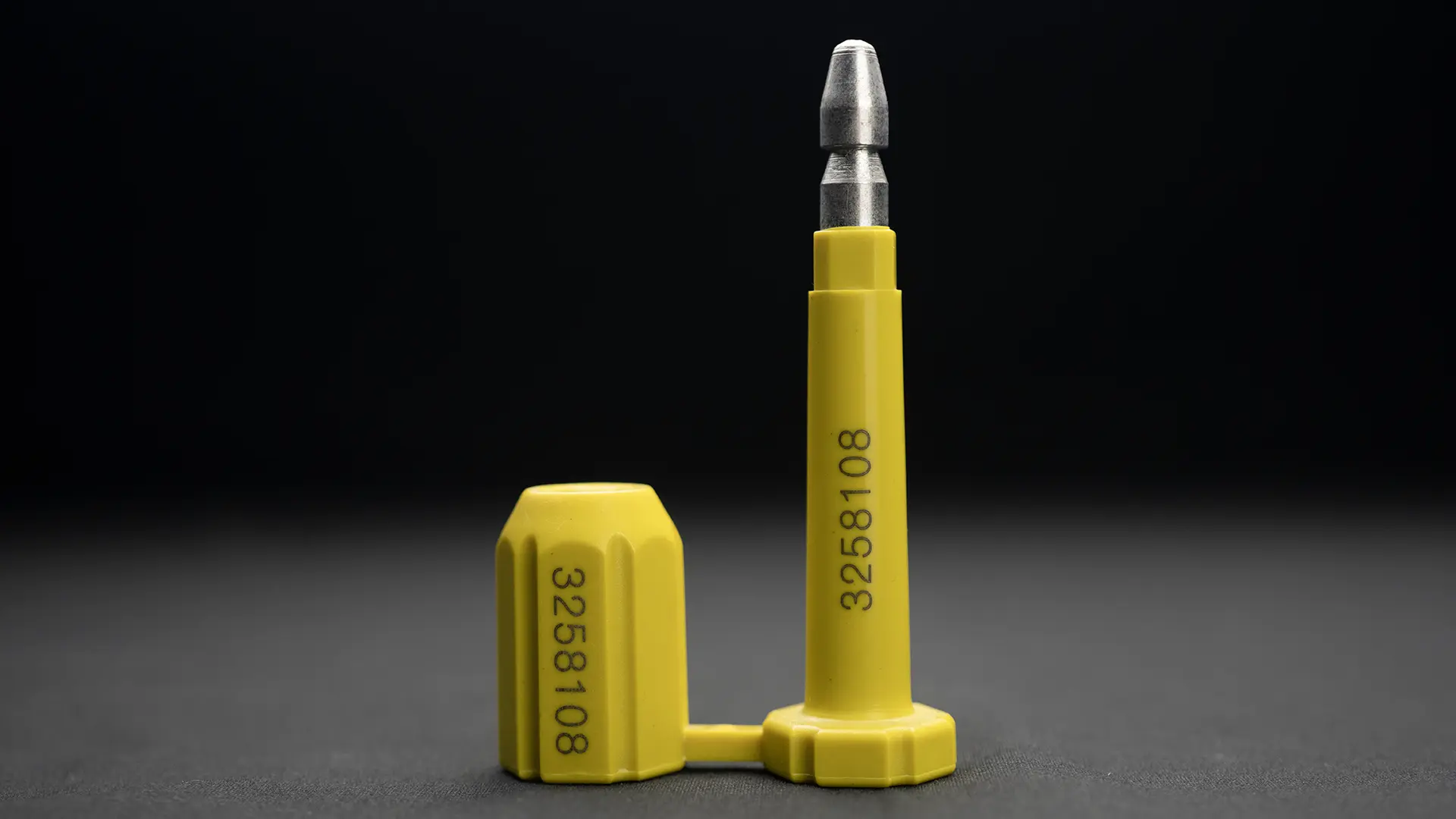
So, the shorter you can make your pulses, the more you can mark plastics like ABS and polypropylene without worrying about burning or melting. Or, make your pulses longer to put in as much energy as possible and engrave depth into stainless steel. Lotus MOPA lets you do both of these with one machine.

In fact, not all MOPA lasers are created equal. The industry standard is to offer 2 or 3 waveforms (the setting where you decide your pulse width). Lotus MOPA offers 17 different waveforms, and so you’ve got far more options of how much energy you laser mark with and so how many products you can mark.

MOPA lasers leave a much higher quality finish on your product

This level of control means the quality of finish you can achieve is greatly improved by using a MOPA laser over a Q-Switch. Optimising your laser mark means getting the finish you’re looking for in the fastest possible time. Having your frequency range restricted and your pulse width completely locked to one setting makes that optimisation much more difficult.

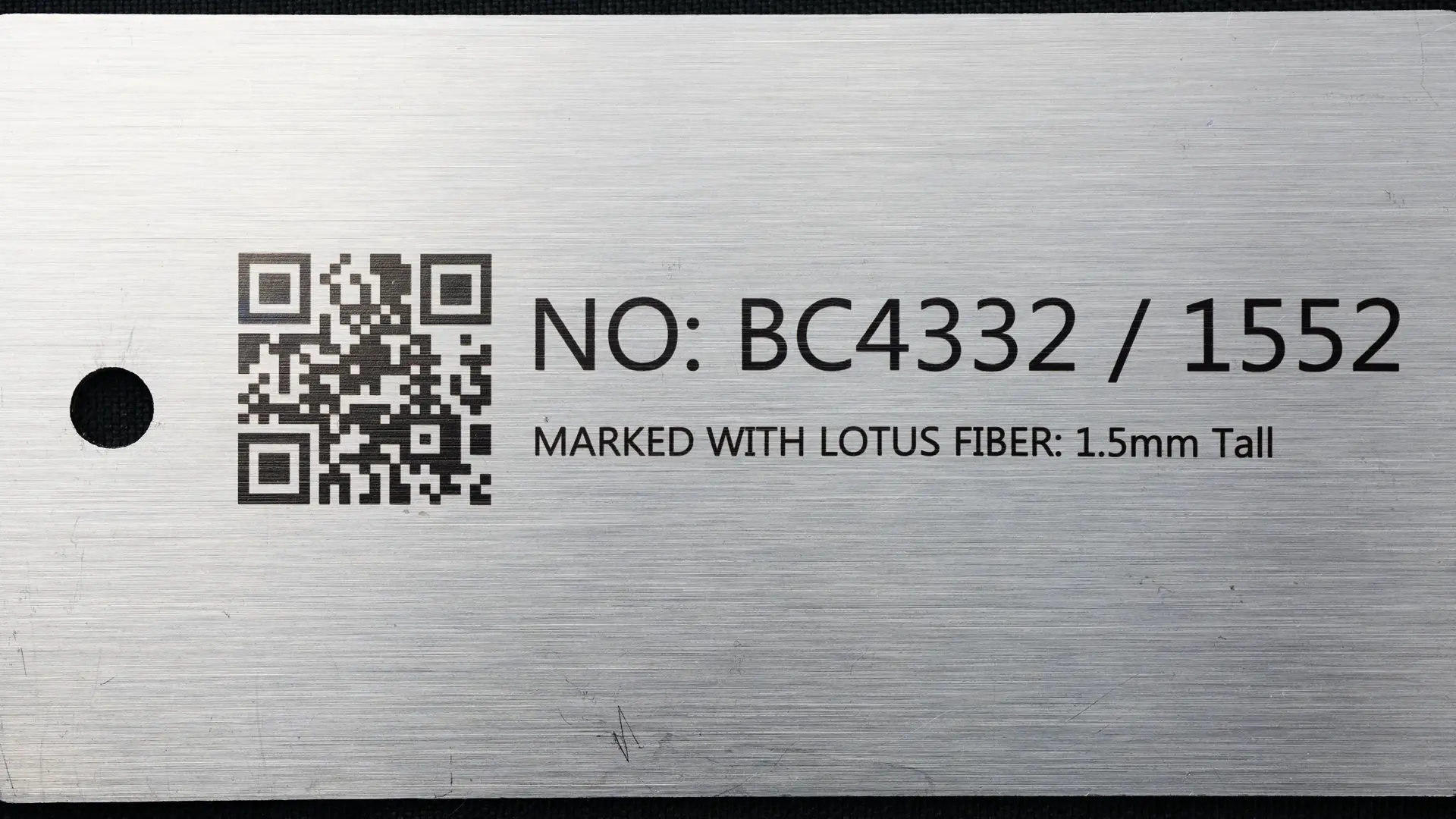
The quality of the engraving that can be produced on a Lotus MOPA is a result of the level of control it offers. It’s why you can get a pristine finish on so many materials, everything from brass to plastic, aluminum to copper, and much more.

Let’s debunk some myths about fiber vs MOPA!

“Standard Fiber Lasers are faster than MOPA”  False.
There is no part of a Q-Switch that makes it faster. In fact, being able to do more laser pulses per second means you’re able to engrave across the material more quickly. MOPA is faster than Q-Switch.

“Q-Switch lasers have lower failure rates”: False.
The deciding factor in the failure rate of a laser is the quality of the components. In fact, with MOPA being the newer technology, it’s likely to fail less than Q-Switch. But this is not automatic: a laser with bad components will fail faster.
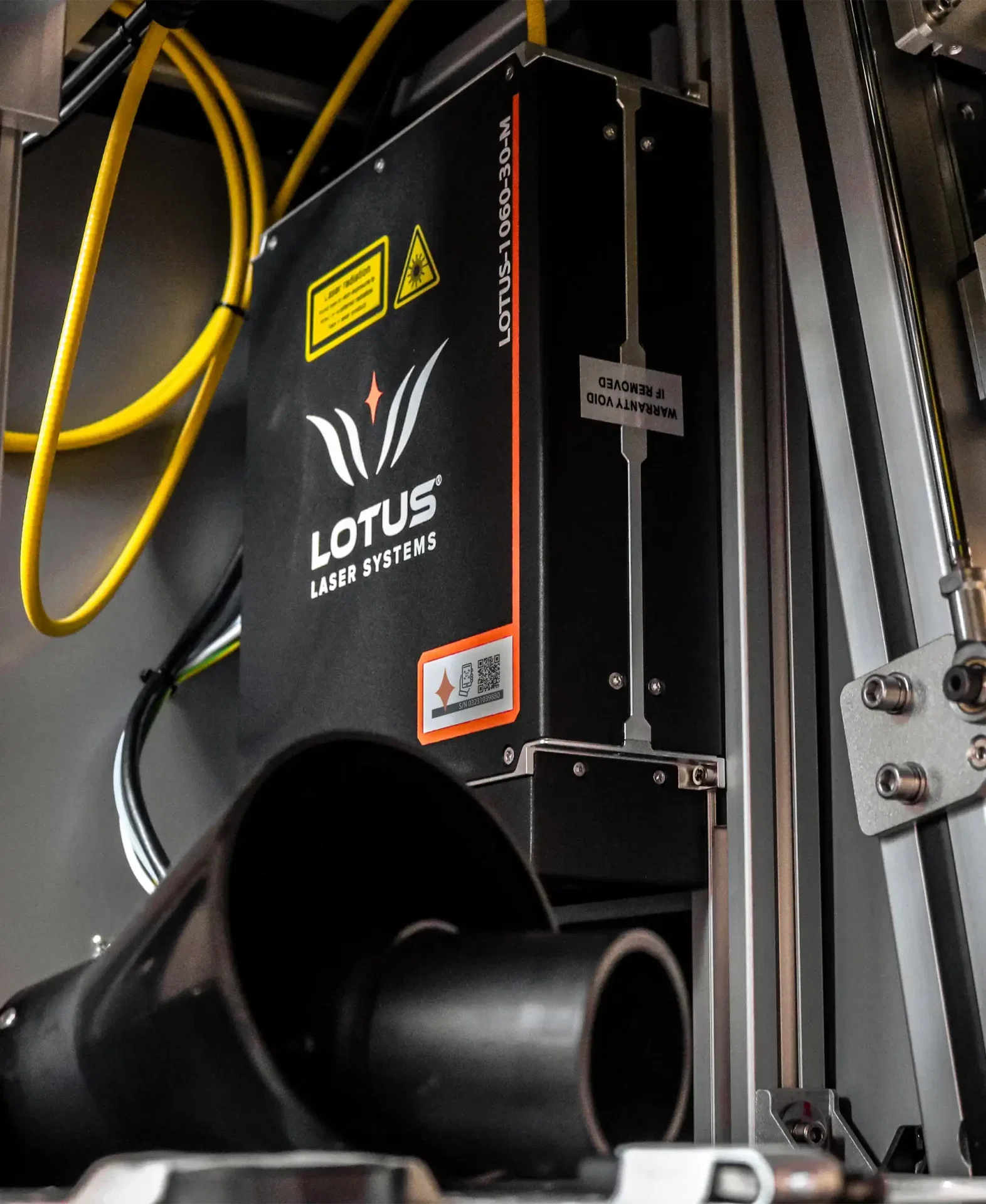
This is why Lotus MOPA lasers are OEM: built to an exact specification that guarantees quality components and an incredible longevity of marks.

“Q-Switch Lasers are better for deep engraving”: False.
For deep engraving, you need to put as much laser energy as possible into your material, to remove the surface layer by layer. So a Q-Switch fiber laser, with restricted frequency and no control over pulse width, cannot put more energy in than a MOPA. 

Most Q-Switch lasers are locked to a ~150ns pulse. A Lotus MOPA can hold a pulse for ~500ns. More than three times as much energy means deep engraving will be much quicker.

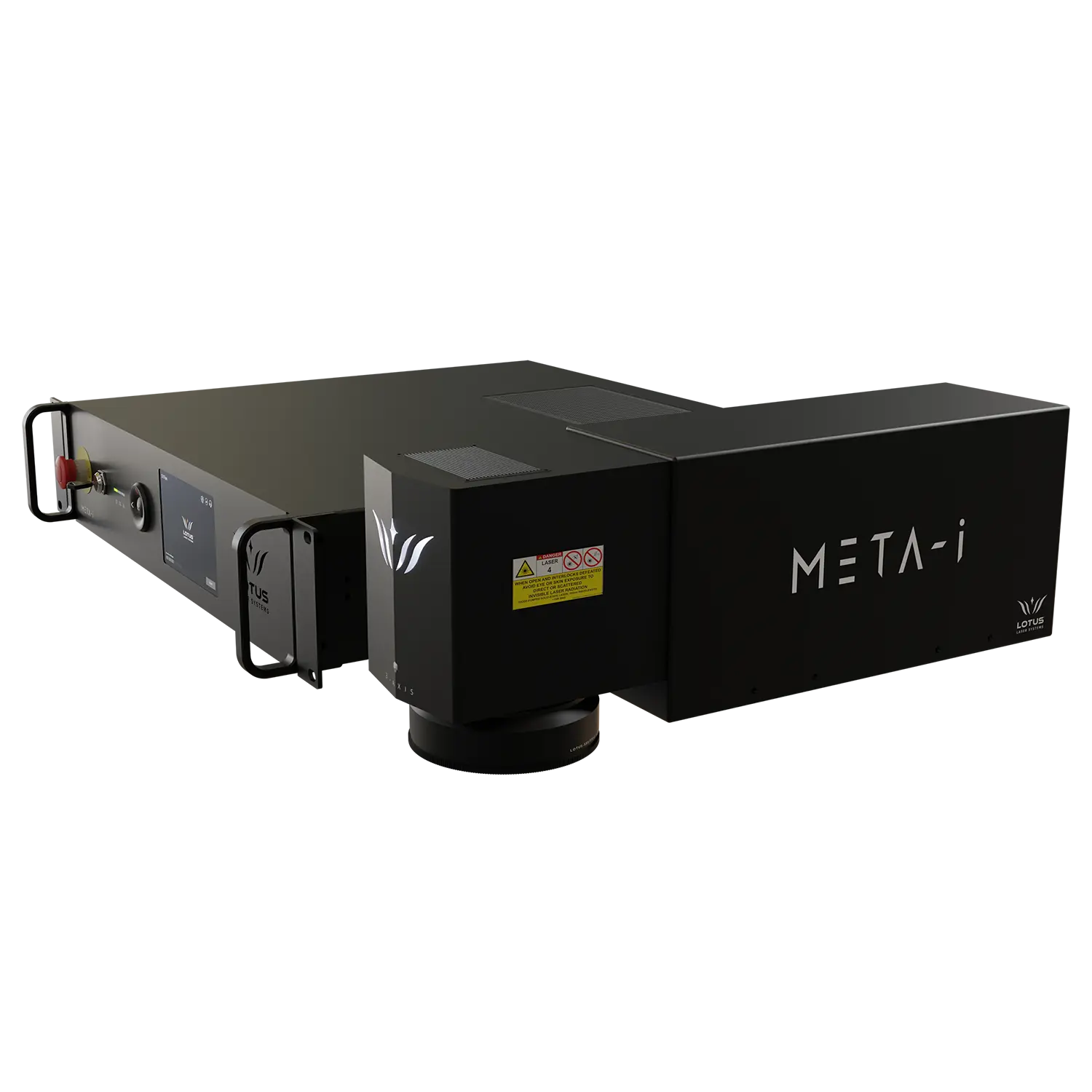
ELI X17 MOPA Fiber Laser

Lotus Solution Comparison

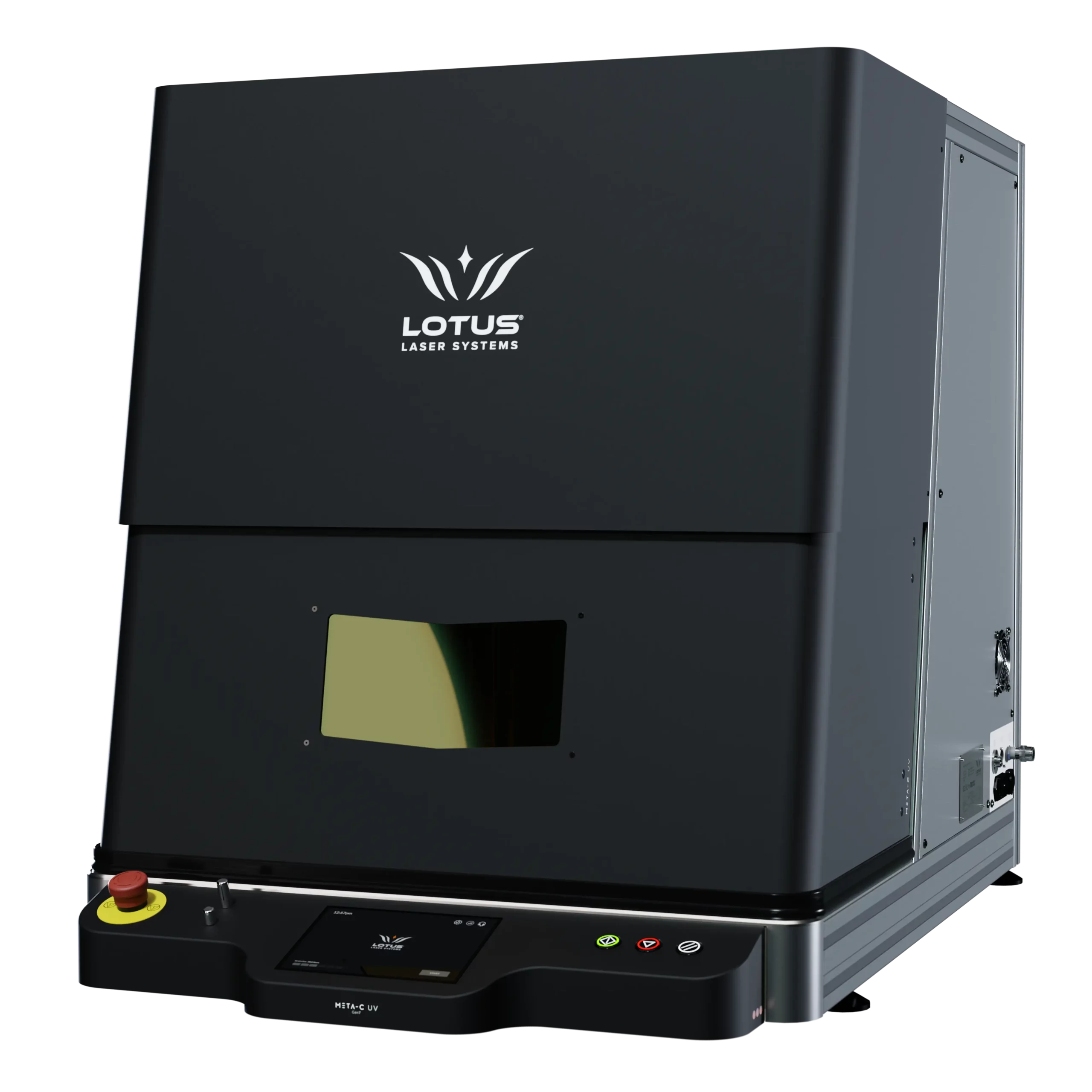
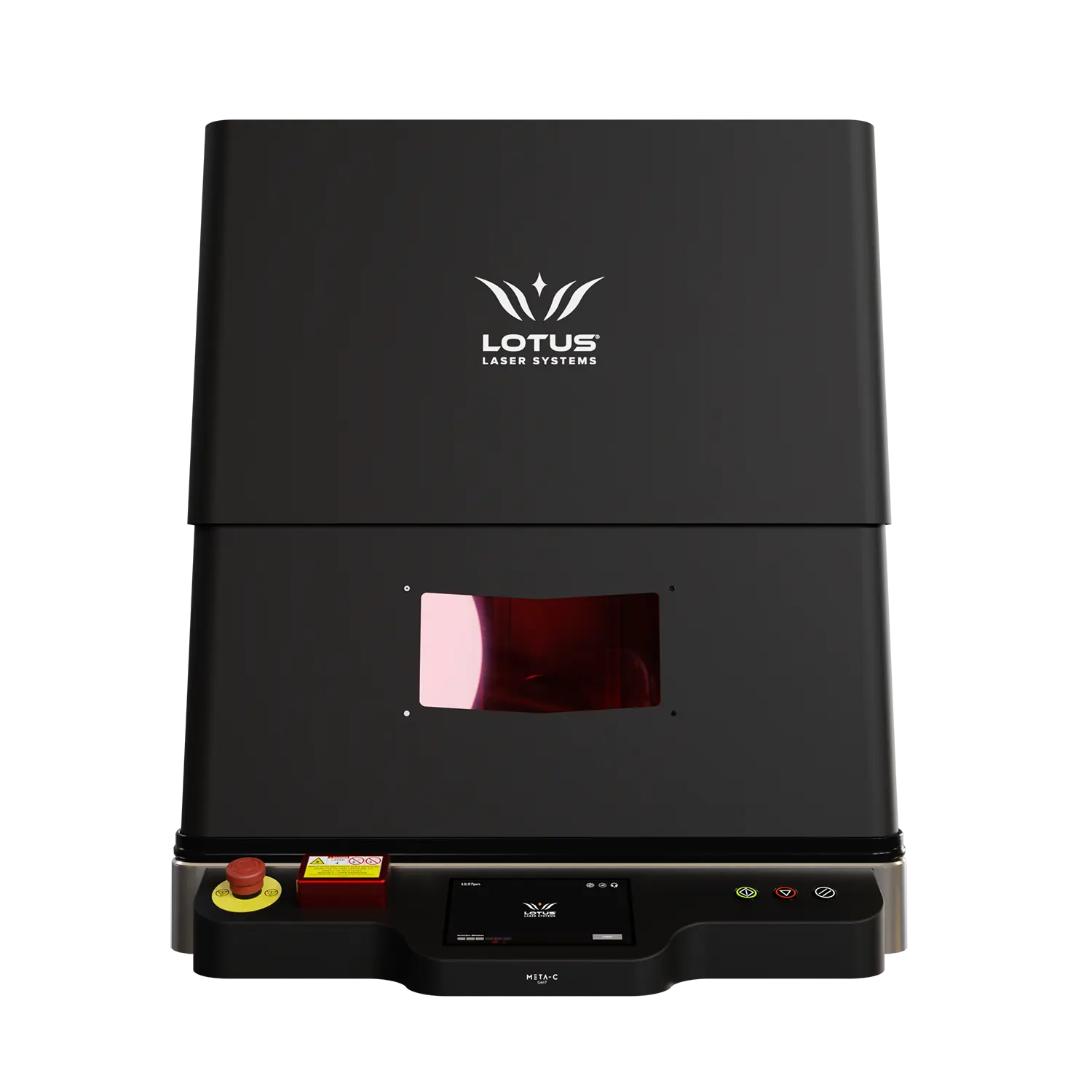
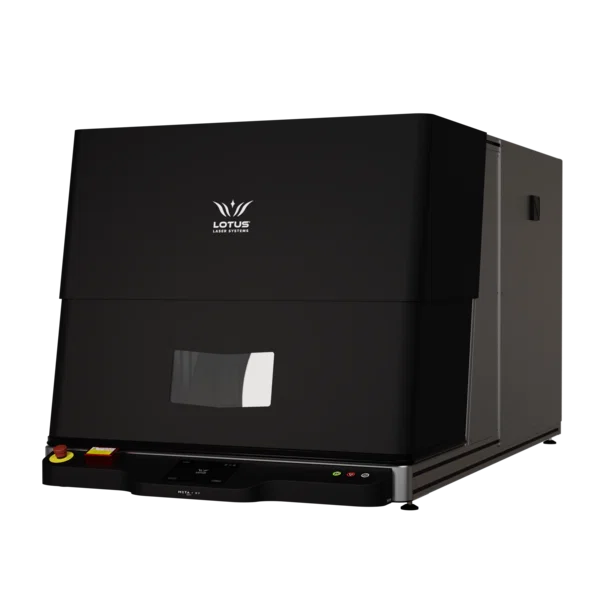
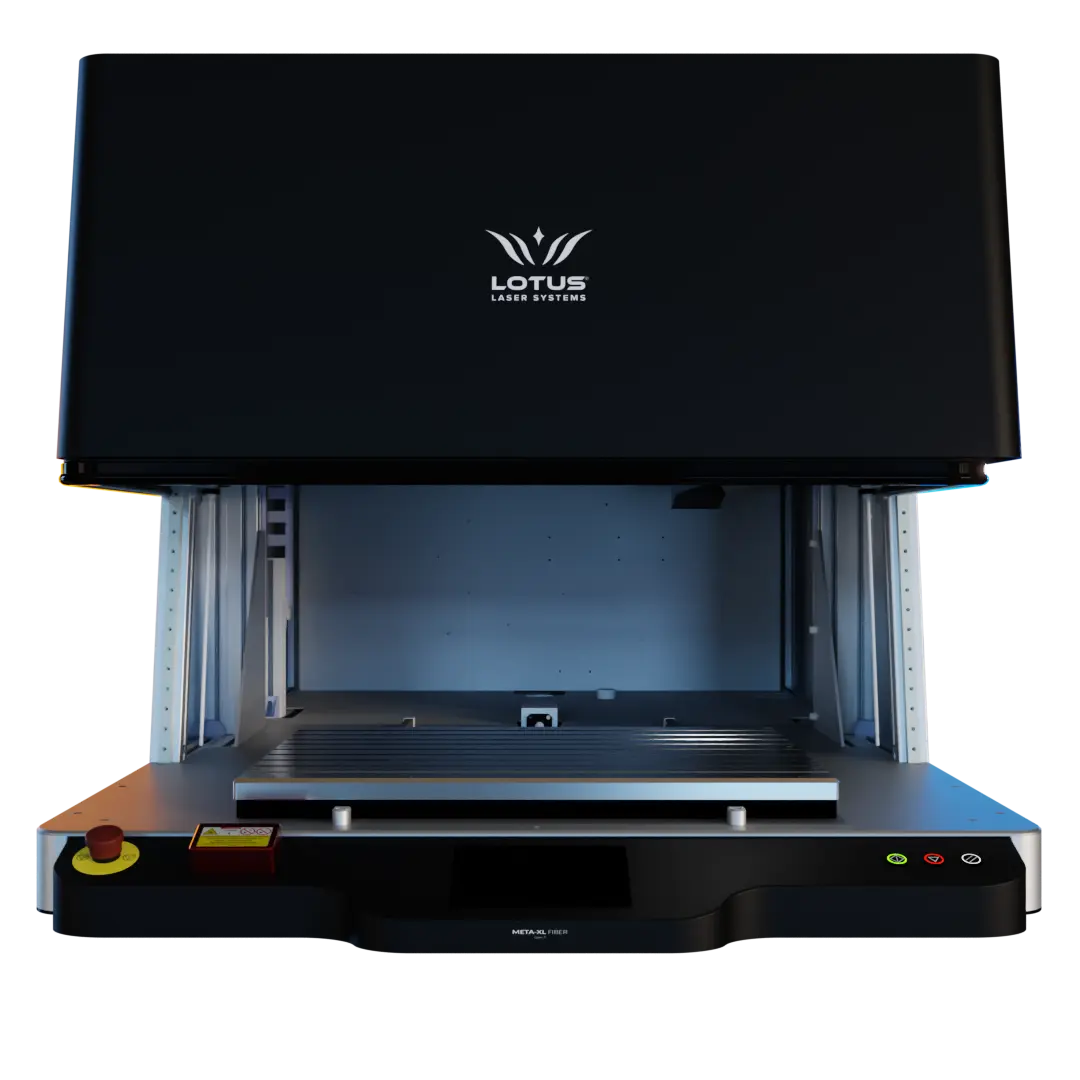
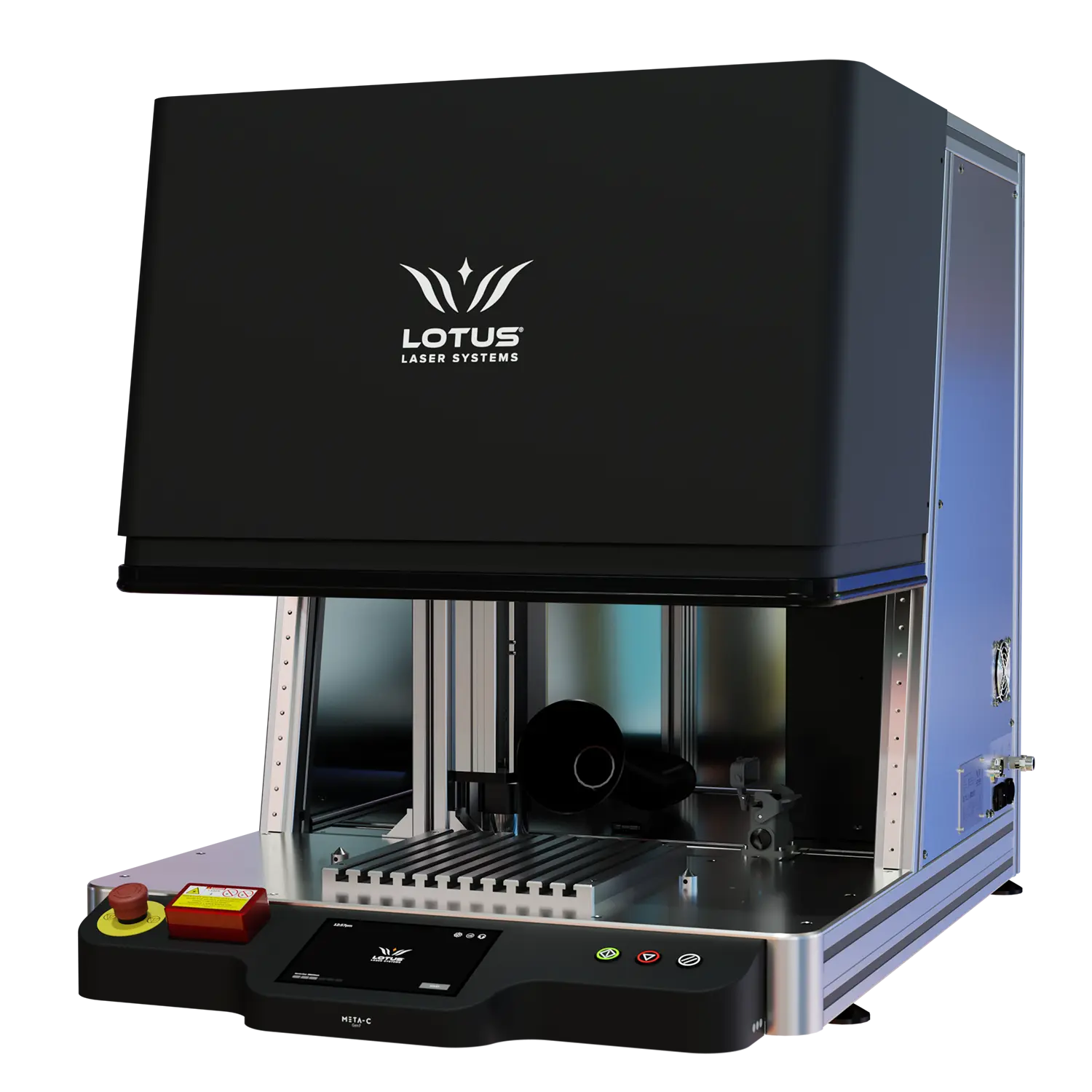
Meta-C Fiber Laser Engraver


Meta-C

A powerful, production-ready workstation, engineered with leading laser technology for precision, consistency and reliability.

dimension
150x150mm (upgradeable to 380x180mm)
Working Area
Z-Axis
14.49 inches
Z-Axis (Max Part Height)
dims
31.1 inches x 46.26 inches x 37.32 inches
Dimensions (WxDxH)
class-2
Class 2 Operation
CE Certified
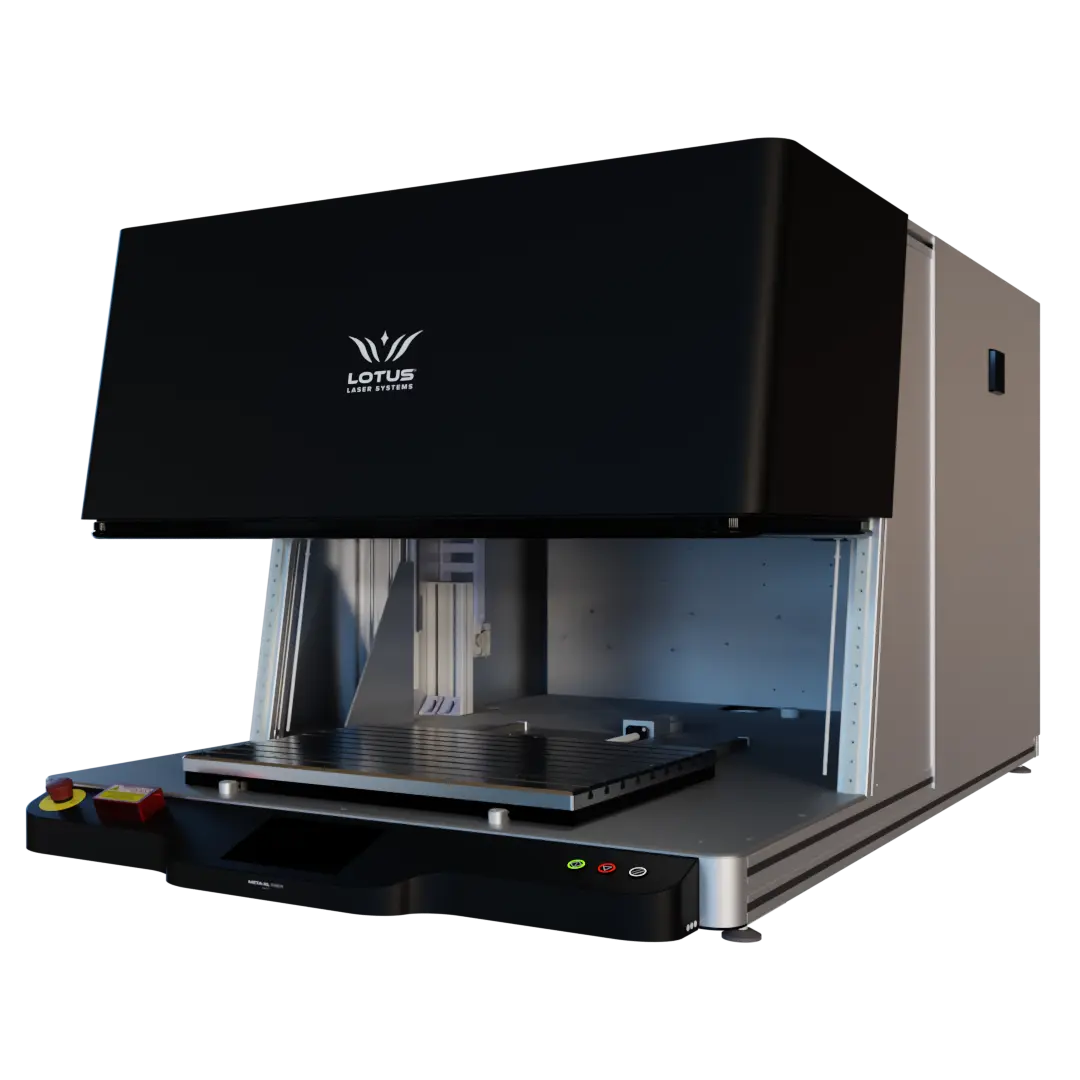
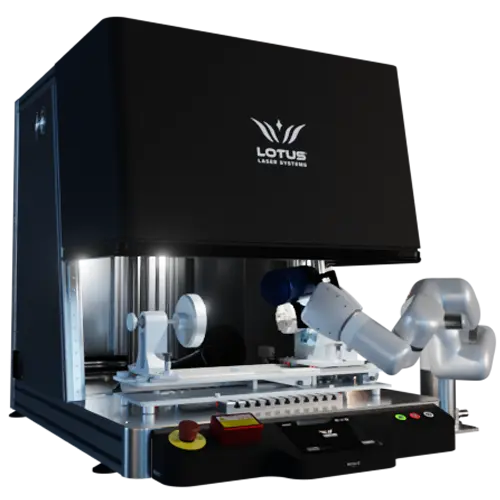
Lotus Meta-XY Laser Engraving Machine


Meta-XY

The same powerful, technology-driven system, expanded for lasering freedom across a larger work area.

dimension
27.56 inches x 19.69 inches
Working Area
Z-Axis
14.49 inches
Z-Axis (Max Part Height)
dims
44.88 inches x 77.76 inches x 74.21 inches
Dimensions (WxDxH)
class-2
Class 2 Operation
CE Certified
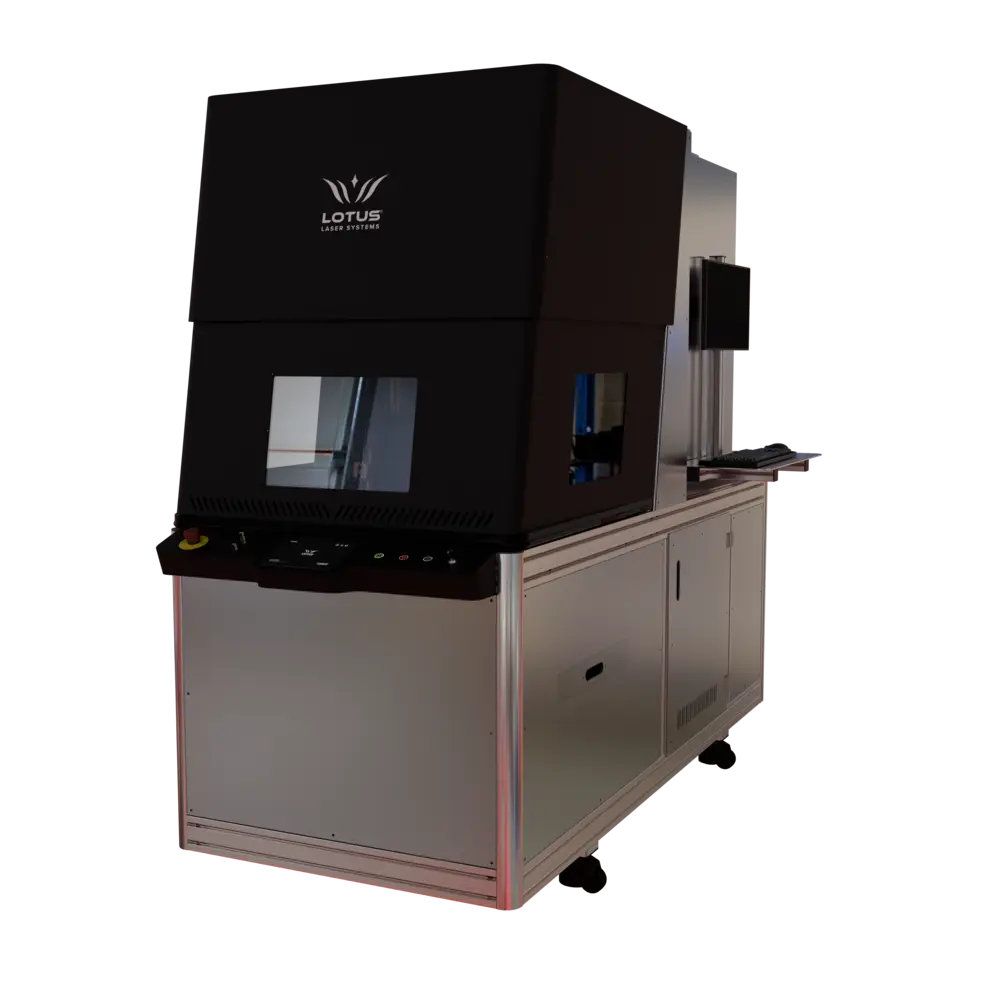
Lotus Meta-XY XL Laser Engraving Machine


Meta-XY XL

All the performance and leading technology of Meta-C, designed and scaled for the largest parts and maximum laser coverage.

dimension
39.37 inches x 23.62 inches
Working Area
Z-Axis
14.49 inches
Z-Axis (Max Part Height)
dims
57.17 inches x 74.41 inches x 74.53 inches
Dimensions (WxDxH)
class-2
Class 2 Operation
CE Certified

Privacy Overview
Lotus Laser Systems - Favicon 1

This website uses cookies so that we can provide you with the best user experience possible. Cookie information is stored in your browser and performs functions such as recognizing you when you return to our website and helping our team to understand which sections of the website you find most interesting and useful.

Strictly Necessary Cookies

Strictly Necessary Cookie should be enabled at all times so that we can save your preferences for cookie settings.

Analytics

This website uses Google Analytics to collect anonymous information such as the number of visitors to the site, and the most popular pages.

Keeping this cookie enabled helps us to improve our website.

Marketing

This website uses the following additional cookies:

(List the cookies that you are using on the website here.)